Flowers are one of the easiest wedding costs to let spiral, and one of the easiest to bring back under control once you know where the savings actually are. You don’t need to cut back on impact to cut back on cost. Here’s how to get the fullest, most beautiful look for your budget.
Choose Seasonal, Locally Grown Flowers
Using flowers that are in season and sourced close to home is one of the most effective ways to reduce your overall spend. Imported or out-of-season blooms cost more because they’ve travelled further and are harder to source, while seasonal Irish-grown flowers are more readily available and fresher on arrival. That freshness matters too: flowers that haven’t spent days in transit last longer and look better in photos, and guests will notice the scent of genuinely fresh blooms the moment they walk into your venue.
Be Mindful of Holiday Pricing
Flower prices spike around occasions like Valentine’s Day, Mother’s Day and Christmas, when demand rises sharply. If your wedding date falls near one of these, expect higher costs for the same flowers you’d get more cheaply at another time of year. There’s an upside, though: if you do marry around a holiday, your ceremony venue may already be decorated for the season, meaning you can focus your flower budget entirely on the reception rather than paying to decorate both spaces.
Lean on Greenery
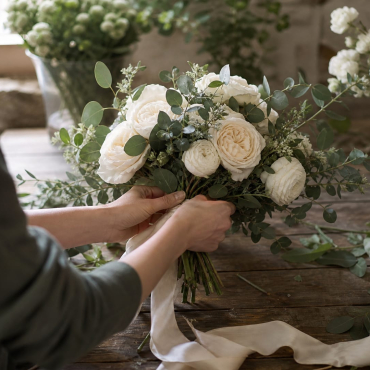
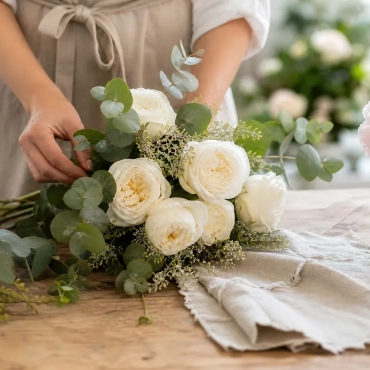
Foliage such as ferns, eucalyptus and trailing ivy costs significantly less than flowers, and using it generously in bouquets, centrepieces and around the venue creates a lush, abundant look for a fraction of the price. This approach suits rustic and garden-style weddings particularly well, where mossy arches and greenery-heavy arrangements are already part of the aesthetic, but it works for almost any theme when used thoughtfully.
Use Statement Pieces Instead of Filling Every Space
Rather than spreading your budget thinly across every surface, renting a few larger statement pieces, such as potted trees or branches, can create the impression of a fully decorated room without the cost of filling it with flowers. Adding fairy lights or simple hanging details to a rented tree gives you a striking focal point and a strong photo opportunity, often for less than an equivalent flower installation would cost.
Make Your Flowers Work Twice
Ceremony flowers are often used for an hour and then left behind. Arranging for your florist to move ceremony arrangements to the reception venue afterwards means you get full use out of flowers you’ve already paid for, rather than budgeting separately for both spaces. This is one of the simplest ways to stretch a fixed flower budget further, and most florists can build the move into their setup and pack-down schedule.
Prioritise the Pieces That Matter Most to You
Not every element of your wedding flowers needs equal attention. If a large, dramatic bridal bouquet is what you care about most, put more of your budget there and simplify elsewhere, such as smaller buttonholes or simpler table centrepieces. A good florist will help you identify where to spend and where to save without the overall look feeling unbalanced.
Talk to Your Florist Early
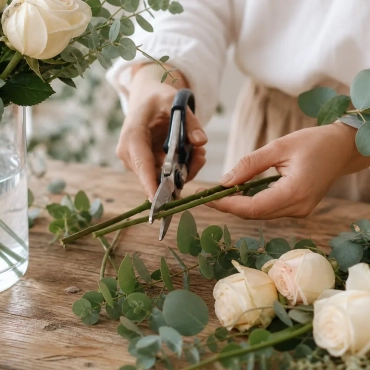
The earlier you bring a florist into the budgeting conversation, the more options they can offer you. Florists who know your venue, your date and your priorities can often suggest substitutions or seasonal alternatives that get you the same visual impact for considerably less, but that only works if there’s time to plan around it rather than scrambling in the final weeks.
Planning Your Wedding Flowers on a Budget?
At Flowers Touch, we build every proposal around your actual budget and priorities, not a fixed package. If you’d like a clear breakdown of where your money goes and where you can save, get in touch for a free consultation.